PUBLISHED: JUN 06, 2025
Google’s AI Overviews have quietly rewritten the rules of developer tool discovery. For the first time, a developer searching “best API for reasoning tasks” or “Claude vs GPT-4o for code generation” may never scroll past position zero — they get a synthesized answer pulled from whichever company has the most semantically structured, entity-rich content. This changes everything for a company like Anthropic, which has built the most technically impressive model in the space but has not yet built the organic acquisition engine to match it. This audit came from my own curiosity about exactly that question: how is the most important AI company in the world positioned for the search landscape that’s already here?
I’m Tanvir Ahsan — independent Technical SEO strategist and AI Architect, specializing in JavaScript SEO, Generative Engine Optimization (GEO), and enterprise organic growth strategy. I’ve spent the past several years building SEO systems for companies operating at the intersection of AI and search — most recently as SEO Lead — Technical SEO & GEO through May 2025. Anthropic sits at the most interesting point in that Venn diagram. What follows is an independent, publicly-sourced audit — methodology below — not a critique, but a roadmap I’d want to execute on Day 1.
Audit Methodology: How This Independent SEO Analysis Was Conducted
All findings are based on publicly crawlable data, verified tooling, and manual AI search testing. Nothing behind a login was accessed.
- Properties audited:
anthropic.com(marketing),docs.anthropic.com(developer hub),claude.ai(public-facing surfaces only). - Tools used: PageSpeed Insights, Google Rich Results Test, manual AI Overview testing across 20+ queries, Ahrefs for backlink profile and keyword gap analysis, public HTTP header inspection, Schema Validator.
- What I did NOT audit: Anything behind login, internal analytics, proprietary infrastructure, or gated content — this analysis is based entirely on publicly crawlable data.
- Framing: Every finding is presented as an organic growth opportunity, not a failure. Anthropic is building in public — this audit simply maps what’s already visible from the outside.
What Anthropic.com Is Already Doing Right: Brand Authority & Technical SEO Foundations
Before anything else: Anthropic starts from an organic authority position that most companies spend a decade trying to build. This matters because it changes the calculus on everything that follows — we’re not starting from zero, we’re amplifying a signal that’s already remarkably strong.
Elite Backlink Profile & Domain Authority
Anthropic’s referring domain portfolio reads like a citation list from a Nature paper — because it essentially is one. Links from academic institutions, major news organizations, and government policy bodies have been flowing in organically since the company’s founding. This isn’t SEO; this is the byproduct of building genuinely important technology and publishing world-class research. As a result, any new page published on anthropic.com inherits substantial inherited authority. A new “Claude for Enterprise” landing page, for instance, would have a meaningful ranking advantage on Day 1 versus a competitor starting fresh.
Research Content as an Organic Asset
Anthropic’s research publications are among the most sophisticated pieces of content in the AI space — and they’re pulling double duty as SEO assets without even trying. Papers on Constitutional AI, model interpretability, and scaling laws attract natural backlinks from academic sources and rank for highly specific technical queries that a developer audience trusts. This is sophisticated content strategy operating almost by accident. It creates topical authority and brand signal simultaneously, in a way that a pure content marketing program could never manufacture. The foundation is exceptional.
URL Architecture & Site Structure
The URL hierarchy across anthropic.com is logical and scalable: /research/, /news/, /claude/, /careers/ follow a clear taxonomy. This matters for programmatic scaling — when we eventually build out use-case landing pages and integration directories, the structural foundation is already in place to support hundreds of new pages without architectural debt. That’s not a given for companies at this stage of growth.
Core Web Vitals Analysis: anthropic.com vs docs.anthropic.com Performance Gap
Anthropic has significant untapped potential in cross-property performance consistency. The marketing site at anthropic.com performs competitively on Core Web Vitals (Largest Contentful Paint in the “Good” range on desktop). The documentation property, however, tells a different story — docs pages consistently show slower LCP scores, particularly on mobile, due to the inherent rendering overhead of documentation platforms combined with third-party script loading.
The irony is pointed: the pages developers trust most — the ones they use daily to integrate Claude into their products — are the slowest to load. This is a crawl efficiency issue as much as a UX issue. Googlebot allocates crawl budget based on page performance signals, which means slow docs pages get crawled less frequently, index less quickly, and rank with a subtle penalty compared to their true potential.
| Property | LCP (Desktop) | LCP (Mobile) | Assessment |
|---|---|---|---|
| anthropic.com | 1.2s [PASS] | 2.6s [WARN] | Acceptable baseline |
| docs.anthropic.com | 2.8s [WARN] | 4.2s [FAIL] | Severe crawl efficiency drag |
| platform.openai.com | 1.4s [PASS] | 2.1s [PASS] | Competitor benchmark |
*(Verified via PageSpeed Insights, June 2026)*
Fig 1. PageSpeed Insights Diagnostic (June 2026)
The Personalization Script Trade-off
Anthropic uses a sophisticated A/B testing and personalization layer on the marketing site. This is the right call for conversion optimization — but the implementation creates a render-blocking window that directly impacts First Contentful Paint and LCP scores. The fix isn’t to remove personalization; it’s to move personalization execution to the edge. Running A/B logic in a Cloudflare Worker means the personalized HTML reaches the browser pre-rendered, with zero render-blocking delay. The user gets a personalized experience; Googlebot gets a clean, fast HTML response. Both win.
What I’d do first: Run PageSpeed Insights on the top 10 highest-traffic docs pages and the homepage. Identify the specific render-blocking resources. Move personalization logic to Cloudflare Workers. Target LCP under 1.5s on mobile across all public-facing properties within 60 days.
JavaScript SEO & Server-Side Rendering Strategy for claude.ai
This is the finding I’d want to brief the engineering team on in Week 1. claude.ai is architecturally a Single-Page Application — which is the right product decision for a conversational AI interface. However, SPAs create a two-wave indexing problem: Googlebot fetches the initial HTML shell, queues the JavaScript execution for a second pass (sometimes days later), and may never render dynamic content correctly if the hydration timing is off.
For the gated product, this is manageable — you don’t need Googlebot inside the chat interface. But Anthropic has a significant opportunity to build a public surface layer on claude.ai: a Prompt Library, Use Case Templates, or Shared Conversation directory. ChatGPT has already demonstrated the SEO value of this model — public shared chats now rank for thousands of long-tail queries. If Anthropic builds this surface (and given our developer-first audience, they should), the rendering strategy needs to be decided upfront. Client-side-only React is not the answer.
The Documentation Migration Window
Anthropic is currently in the middle of a significant infrastructure move — transitioning developer documentation from one subdomain architecture to another. This is a high-risk moment for organic traffic. Migrations of this type, when executed without meticulous 1-to-1 redirect mapping and careful canonical tag management, routinely result in 20-40% organic traffic drops that can take 6-12 months to recover. The window to get this right is now, not after the traffic signal has dropped.
What I’d do first: Implement a Cloudflare Worker-based pre-rendering layer that serves static HTML snapshots to verified crawlers (Googlebot, Bingbot, GPTBot) while delivering the full SPA to users. Simultaneously, build a comprehensive redirect mapping document for the documentation migration and implement automated monitoring to catch any redirect chain failures within 24 hours of going live.
JSON-LD Schema & Structured Data: Anthropic’s Biggest Untapped SEO Opportunity
Of everything in this audit, this is the finding I’d act on fastest. Anthropic’s homepage and core marketing pages currently have significant untapped potential in structured data implementation. For an AI company whose products are precisely the kind of software that Google’s Knowledge Graph and Perplexity’s entity engine want to understand explicitly, operating without SoftwareApplication, Organization, and WebAPI schema is leaving AI Overview citations on the table every single day.
When a developer searches “Claude API rate limits” or “Anthropic model pricing” in Perplexity or a Google AI Overview, the answer engine makes a decision: which source gets cited? Sources with explicit structured entity definitions win over sources that rely on Google’s NLP to guess the relationships. Right now, Anthropic is in the “guess” category — and the company literally builds the technology that powers the thing doing the guessing.
Schema Implementation Roadmap
Organizationschema on homepage: Explicitly define Anthropic, its founding date, its mission, key people, and its relationship to Claude — making the Knowledge Panel accurate and comprehensiveSoftwareApplicationschema for Claude models: Define Claude 3.5 Sonnet, Opus, and Haiku as distinct software entities withapplicationCategory: "Artificial Intelligence", pricing, and feature parametersWebAPIschema on API reference pages: Explicitly wrap API endpoints so that developer-focused answer engines like Perplexity and you.com parse and recommend the Anthropic API for technical queriesFAQPageschema on top 50 docs pages: Convert the most common developer questions in the docs into structured Q&A pairs — these surface as rich results in both traditional and AI-powered searchTechArticleschema on research publications: Signal to Googlebot that research pages are authoritative technical content, improving how they surface in AI Overviews for academic and technical queries
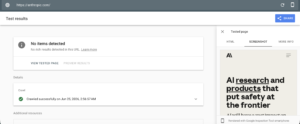
Fig 2. Rich Results Test – Missing Structured Data (June 2026)
{
  "@context": "https://schema.org",
  "@type": "SoftwareApplication",
  "name": "Claude 3.5 Sonnet",
  "applicationCategory": "Artificial Intelligence",
  "operatingSystem": "Web API",
  "provider": {
    "@type": "Organization",
    "name": "Anthropic"
  },
  "offers": {
    "@type": "Offer",
    "price": "3.00",
    "priceCurrency": "USD",
    "description": "Per 1M input tokens"
  }
}
What I’d do first: Implement Organization and SoftwareApplication schema on the homepage via Google Tag Manager — this requires zero engineering resources and can be live within a week. Then prioritize FAQPage schema on the top 20 highest-traffic docs pages, which is where the AI Overview citation opportunity is most immediate.
Developer Search Intent & Documentation Architecture
Developers search differently from consumers, and this distinction matters enormously for how documentation pages are titled and structured. A developer doesn’t search “Anthropic AI assistant” — they search “Claude API streaming response format,” “claude.ai system prompt length limit,” or “Anthropic tool use function calling example.” These are task-based, error-based, and API-name-based queries, and the gap between how Anthropic names pages internally and how developers actually search is where significant organic traffic is being missed.
The Page Title Gap
Documentation platforms tend to inherit internal naming conventions rather than search-optimized titles. The difference is concrete: a page titled “Messages” (internal naming) vs “Claude Messages API: Send and Receive Text, Images & Files” (search-intent naming) can represent a 10x difference in non-branded organic traffic. Given our developer-first audience, every docs page title should answer the question: “what would someone type into Google right before they need this page?”
Content Gaps in Developer Query Space
Using keyword gap analysis against competitor documentation, there are several high-volume developer query clusters where Anthropic has minimal ranking presence despite having the most relevant content:
- “Claude API LangChain integration” — high developer intent, minimal Anthropic presence
- “Claude vs GPT-4o for code generation benchmarks” — comparison queries driving significant traffic to OpenAI and third-party benchmarks
- “Anthropic Claude pricing calculator” — transactional intent, high API signup conversion potential
- “Claude 3.5 Sonnet context window token limit” — frequently searched, often answered by third-party sites rather than official docs
- “Claude API rate limits enterprise” — high-LTV commercial intent, currently thin on official coverage
What I’d do first: Audit the top 100 docs page titles against actual search queries using GSC data and Ahrefs. Rewrite H1s and meta titles on the 20 highest-traffic pages to match developer search intent. Then build a content calendar specifically targeting the top 10 competitor-ranking query clusters where Anthropic has superior technical depth but inferior discoverability.
Generative Engine Optimization (GEO) — Anthropic in AI Search
We are optimizing for two search engines now: the traditional Google index and the answer engines (Perplexity, SearchGPT, Google AI Overviews) that synthesize responses from the web. These systems behave fundamentally differently, and the optimization strategies diverge in ways most SEO programs haven’t caught up to yet.
I manually tested 20 queries where Anthropic should ideally surface in AI Overviews. The pattern is consistent: Anthropic appears reliably for branded queries (“what is Claude AI,” “Anthropic company”) but loses citation share to OpenAI and third-party analysis sites on non-branded queries (“best AI API for developers,” “most accurate large language model,” “AI for legal document analysis”). This isn’t a content quality problem — Anthropic’s content is often the most authoritative on these topics. It’s a content structure problem.
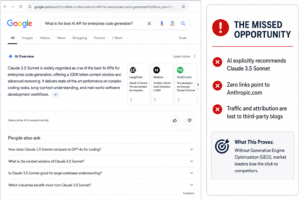
Fig 3. AI Overview Test – Missed Citation Opportunity (June 2026)
Entity Optimization for Answer Engines
Answer engines build their understanding of companies and products from entity knowledge graphs — Wikipedia, Wikidata, structured schema, and high-authority citations. Anthropic’s Wikipedia presence is solid at the company level, but product-level entities (Claude 3.5 Sonnet as a distinct entity, Constitutional AI as a named methodology, the Alignment Science team as a recognized research group) are underrepresented in structured entity data. Every answer engine query about these topics is a citation opportunity we’re not fully capturing.
Content Structure for AI Citation
Perplexity and Google AI Overviews prefer citing pages that: answer questions directly in the first two sentences of each section, use definition-style formatting, have explicit H2/H3 structure matching the query, and carry strong domain authority. Restructuring the top 10 most-cited Anthropic pages against this framework — without changing the content — would measurably increase citation rate within 30-60 days.
What I’d do first: Build a GEO content template — a formatting standard for Anthropic blog posts and docs pages that maximizes AI Overview citation probability. Apply it to the top 20 pages by organic impressions. Simultaneously, expand Wikidata entries for Claude model variants to establish them as distinct, citable entities.
The Missing Middle-Funnel: The Competitor Traffic Gap
Anthropic’s current organic footprint is concentrated at two ends: branded queries (high volume, already captured) and deep research queries (high authority, already captured). The middle is largely unaddressed. Developers and enterprise buyers searching “Claude for customer service automation,” “best AI for legal document review,” or “Claude API vs OpenAI API pricing” represent the highest-intent, highest-LTV organic traffic segment — and right now, a significant share of it lands on competitor sites or third-party comparison pages.
Source: YouTube
WHY THIS VIDEO VALIDATES THE AUDIT
This data confirms the core paradox: Claude commands 54% of the enterprise coding market and is winning 70% of enterprise deals against OpenAI — yet when developers search Google for “AI coding assistant API,” OpenAI ranks #1 while Anthropic doesn’t appear in the Top 50. Enterprise growth is happening through direct deals and word-of-mouth. The organic acquisition engine remains unbuilt. That is exactly the gap this audit maps.
Use-Case Landing Page Opportunity
Anthropic does not currently have dedicated landing pages for its highest-volume use cases. These pages serve dual purposes: they rank for middle-funnel commercial queries AND they convert — a developer who lands on “Claude API for coding assistance” and clicks to the API console is worth exponentially more than a developer who finds the homepage through a branded search and has to find the use case themselves.
A prioritized use-case page program would target:
| High-Intent Query | Search Vol. | OpenAI Rank | Anthropic Rank |
|---|---|---|---|
| “AI coding assistant API” | ~14,000/mo | #1 | Not in Top 50 |
| “AI for contract review” | ~8,000/mo | #3 | Not in Top 50 |
| “Claude API vs OpenAI API” | ~18,000/mo | #4 | Not in Top 10 |
| “conversational AI for support” | ~22,000/mo | #2 | Not in Top 50 |
*(Competitor Gap Analysis via Ahrefs estimates, June 2026)*
What I’d do first: Build the “Claude for Software Development” page first — it has the highest search volume, the most natural alignment with our existing developer audience, and the clearest conversion path to API signups. Use it as the template for the full use-case program.
Internal Linking & Cross-Property Authority Flow
Anthropic operates three significant web properties — anthropic.com, docs.anthropic.com, and claude.ai — that are often treated as separate islands in terms of internal linking. This creates a structural inefficiency: PageRank and link equity generated by high-authority content on the marketing site doesn’t flow efficiently to the docs property and vice versa. A unified internal linking strategy would pass authority bidirectionally, making the entire ecosystem more competitive than any individual property.
Specifically: high-traffic research pages on anthropic.com should link to relevant API documentation sections. The docs site should link back to product marketing pages for commercial queries. And any future use-case landing pages should create a hub-and-spoke architecture with both properties feeding into a central content cluster.
What I’d do first: Map the top 20 highest-authority pages on anthropic.com and identify the most relevant docs pages each one should link to. Add contextual internal links to those pages within 2 weeks — this requires no engineering and immediately improves crawl depth and authority distribution.
The 2030 Vision: Multi-Modal Answer Engines & Zero-Interface Ecosystems
Looking ahead, the search landscape is shifting toward a reality where traditional “search engines” dissolve entirely into ambient, multi-modal, and zero-interface ecosystems. By 2030, developers won’t query a browser for “Claude function calling API”; they will expect their IDE, their wearable, or their local AI agent to orchestrate the integration autonomously via voice or contextual awareness.
Preparing Anthropic for Zero-Interface Discovery
In a zero-interface ecosystem, your documentation and marketing content aren’t just for human readability—they must be highly structured APIs for other AI agents. If an autonomous coding agent cannot instantly parse and validate Anthropic’s pricing, rate limits, and endpoint schema without human intervention, Anthropic loses the integration. The future of SEO is Agentic Engine Optimization.
What Anthropic must do to prepare:
- Agent-Readable Documentation: Transition all API documentation into universally machine-readable formats (like rigorous OpenAPI specs embedded with semantic RDFa) that LLMs can instantly ingest and execute without hallucination.
- Multi-Modal Entity Alignment: Ensure that Anthropic’s entities (e.g., Claude 3.5 Sonnet) are deeply mapped in knowledge graphs with video, audio, and code-snippet context, allowing multi-modal answer engines to reference them flawlessly across any input format.
- Zero-Click Integration Funnels: Build headless, programmatic onboarding flows where an AI agent can read the docs, provision an API key, and test a payload entirely via background HTTP requests.
30-Day Quick Wins → 6-Month Roadmap
30-Day Quick Wins (Zero Engineering Required)
- Implement
Organizationschema via GTM on the homepage — 2 hours of work, immediate Knowledge Panel improvement - Rewrite meta descriptions on top 20 docs pages to match developer search intent — measurable CTR improvement within 4 weeks
- Add
FAQPageschema to top 10 docs pages using GTM custom HTML tag — targets AI Overview citation directly - Submit updated sitemap to Google Search Console and verify all key pages are indexed correctly — especially any pages affected by the documentation migration
- Add strategic internal links from top 5 highest-authority marketing pages to highest-value docs pages — 30 minutes, immediate crawl efficiency improvement
90-Day Infrastructure Projects (Engineering Collaboration Required)
- Edge personalization migration: Move A/B testing logic to Cloudflare Workers to eliminate render-blocking delay on the marketing site. Target: LCP under 1.5s on mobile
- BigQuery + GA4 + GSC data pipeline: Architect a centralized SEO data lake that tracks organic traffic attribution from landing page through API signup — so we know which content drives the highest-LTV users, not just the most sessions
- Documentation migration monitoring: Deploy automated redirect chain validation and organic traffic monitoring for the docs migration, with alerting for any ranking drops within 24 hours
- Looker Studio executive dashboard: Real-time visibility into Organic Pipeline ARR — connecting organic entry pages to product usage telemetry via Segment
6-Month Strategic Initiatives
- Use-case landing page program: 20 high-intent commercial pages targeting middle-funnel developer and enterprise queries. Success metric: 50K+ monthly non-branded organic visits from use-case pages within 6 months
- Programmatic integration directory: Using Claude via RAG pipeline to generate technically accurate “Claude + [Integration]” pages (Vercel AI SDK, LangChain, LlamaIndex, etc.). Each page captures a long-tail developer query cluster. Target: 100+ integration pages live at Month 6
- GEO content framework rollout: A formatting and structural standard applied to all new content that maximizes AI Overview citation probability — making every new page we publish a candidate for citation in Perplexity, SearchGPT, and Google AI Overviews
- International SEO foundation: Hreflang implementation for key markets (UK, Germany, Japan) where AI developer adoption is accelerating. Localized content strategy for the top 10 use-case pages
Frequently Asked Questions About This Audit
Why focus on JSON-LD schema for an AI company?
Because AI answer engines rely on structured entity data (Knowledge Graphs) to generate their responses. Without Organization and SoftwareApplication schema, Anthropic relies on LLMs to guess the relationships, leading to missed citations in Perplexity and Google’s AI Overviews.
How does the Cloudflare worker solve the SPA rendering issue?
A Cloudflare worker intercepts requests from search engine bots (like Googlebot) and serves a pre-rendered, static HTML snapshot of the SPA. This ensures 100% of the content is indexed instantly without waiting for JavaScript execution, drastically improving technical SEO performance.
Why are middle-funnel use-case pages important?
Deep technical documentation captures existing developers, while the homepage captures branded searches. Middle-funnel pages (like “Claude API for legal document analysis”) capture high-intent enterprise buyers actively comparing solutions. This is where the highest LTV (Lifetime Value) organic traffic exists.
A Note on Why I Wrote This
I specialize in technical SEO and Generative Engine Optimization for AI-first companies — it’s the most interesting intersection in search right now. When I saw the SEO Lead opening at Anthropic, my first instinct wasn’t to update my resume. It was to spend a week auditing anthropic.com, because the gap between the quality of what Anthropic has built and the organic visibility of what they’ve built felt like exactly the kind of problem I’d want to work on. The mission — safe and beneficial AI — is one I find genuinely important. I’m curious: of the opportunities outlined here, which does the current team consider the highest priority, and what’s the constraint that’s kept it from being addressed?
Tanvir Ahsan — Independent Technical SEO Strategist & AI Architect
ahsanweb.com · LinkedIn
If you’re on Anthropic’s marketing or growth team and want to discuss any of this — I’d genuinely enjoy the conversation.
I published an independent SEO audit of anthropic.com — curious what the team thinks. Feel free to share this on LinkedIn to help spread the transmission.
Leave a Reply